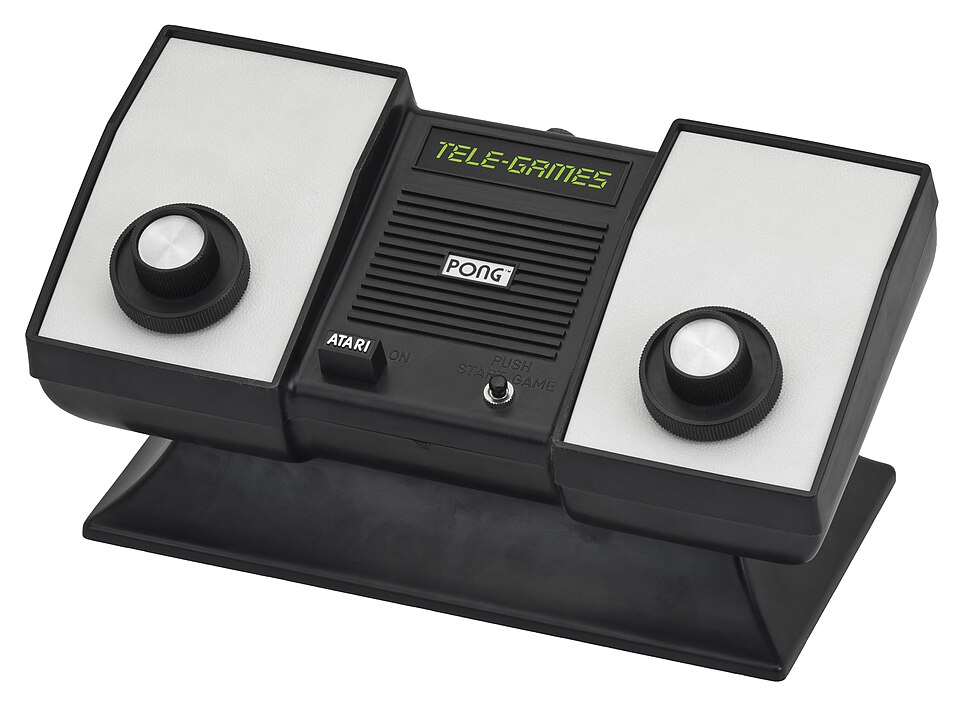
Atari Home Pong
Atari
Pong in your living room. Atari and Sears brought the arcade home and created an industry.
📖 The Story
In 1972, Nolan Bushnell had attended a Magnavox Odyssey demonstration and was impressed. Weeks later, he tasked his young engineer Allan Alcorn — second day on the job at Atari — to create "a ping-pong game" as a learning exercise. Alcorn didn't know it was an exercise: he poured all his energy into it, adding sound effects, variable bounce angles and an automatic scoring system. The result was so fun that Bushnell decided to make it a commercial product. Pong, the coin-op, conquered American bars in 1972.
But Bushnell had a bigger dream: bringing Pong home. The problem was Atari was a small company without mass production capability. The solution came from an unlikely alliance with Sears, the American retail giant. Tom Quinn, Sears electronics buyer, saw Pong at a trade show and ordered 150,000 units for Christmas 1975 — an order Bushnell described as "terrifying" for the young Atari.
Home Pong launched in fall 1975 as a Sears exclusive under the "Tele-Games" brand — the Atari name didn't even appear on the box. Price was $98.95 (about $560 today). The console was a single General Instrument AY-3-8500 chip encased in a brown plastic box with faux wood — the "living room furniture" aesthetic that defined the entire first console generation.
All 150,000 units sold out before Christmas. Sears ordered more. Atari began selling under its own brand too. Success was such that by 1976, at least 75 different companies produced Pong clones — from $20 versions to luxury multi-game models. The "Pong craze" defined Christmas 1975-1976 and proved a mass market existed for home video games.
Home Pong wasn't sophisticated: a single game (with variants), no cartridges, no expansion. But it was the console that transformed video games from bar curiosity to global home phenomenon. Without Pong's success, Atari wouldn't have had resources to create the 2600. Without the 2600, no 1983 crash. Without the crash, no Nintendo renaissance. Every step of gaming history passes through that little brown box with two knobs.
⚙️ Technical Specs
⚡Processing & Memory
🖥️Graphics
🔊Audio
💿Media & Controller
📐Dimensions
📊Commercial Data
📸 Photo Gallery
📰 Vintage Advertising
The advertising campaigns that made a generation dream and invented video game marketing.
🎮 The games that made history
Atari Home Pong was a single-game console: no cartridges, no expansions. But the console's selector offered variants of the same concept — each variant changed rules enough to create a different experience. Here are the games built into Home Pong and its evolutions.
6 games
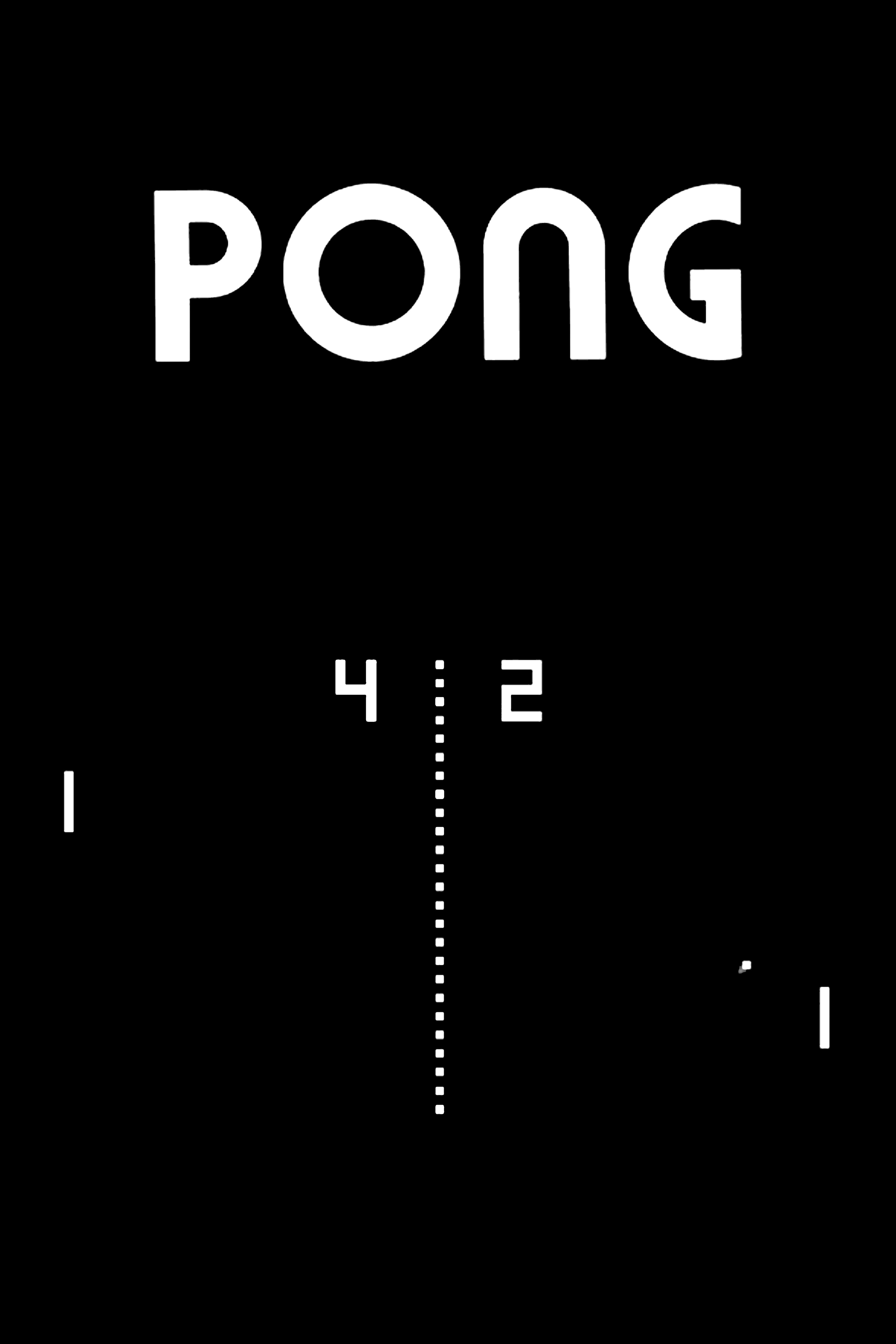 🎮
🎮Pong (Tennis)
Atari / Allan Alcorn
THE game. Two paddles, one ball, automatic scoring. The one that started it all.
 🎮
🎮Pong Hockey
Atari
Pong without center line: the ball bounces everywhere. More chaotic, faster.
 🎮
🎮Pong Squash (Handball)
Atari
Cooperative: both players on same side against the wall. The beginning of co-op.
 🎮
🎮Pong Practice
Atari
Solo practice against the wall. The first single-player game on an Atari console.
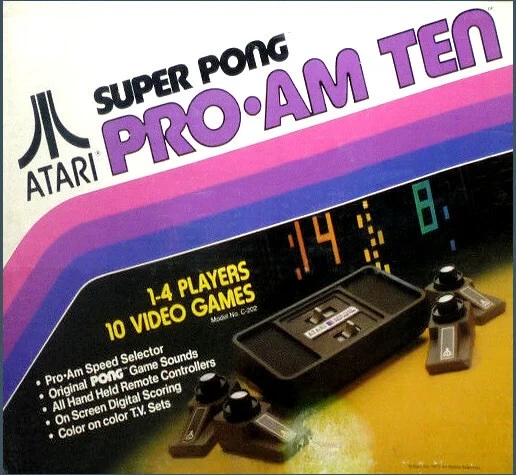 🎮
🎮Super Pong (4 giochi)
Atari
The evolution: 4 games, 4 players. Pong Doubles for the first time.
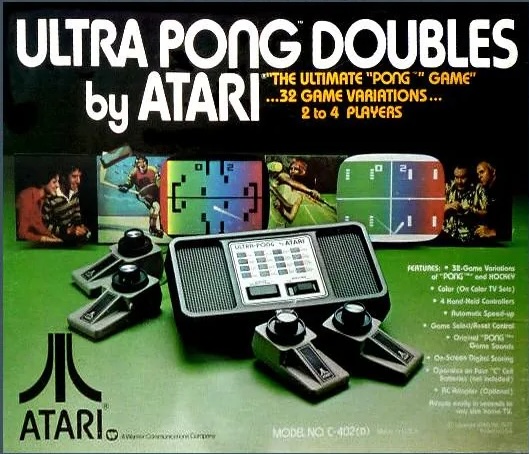 🎮
🎮Ultra Pong (16 giochi)
Atari
16 variants on a single chip. The Pong family's peak before the 2600.